

Discover the 5 essential leadership skills that separate successful people from the rest. Learn how to develop these critical abilities and transform your personal and professional life.
Leadership is not just about managing people or holding a high position. It is about influencing others, making smart decisions, and creating positive change. Whether you are a business owner, manager, parent, or community member, leadership skills matter. These abilities help you guide teams toward goals, solve difficult problems, and build trust with others.
Many people think leadership is something you are born with, This is not true. Leadership skills can be learned and improved with practice. In this article, we will explore five essential leadership skills that every successful person needs. These skills will help you become more effective in your work, stronger in your relationships, and more confident in your life. Understanding and developing these abilities can be the difference between achieving your dreams and falling short.
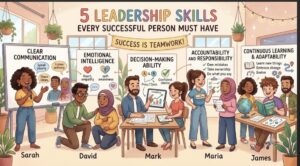
Skill 1: Clear Communication
Clear communication is the foundation of good leadership. It means expressing your thoughts, ideas, and expectations in a way that others can easily understand.
Why Communication Matters
When you communicate clearly, people know what you want and what is expected of them. This reduces confusion, saves time, and prevents mistakes. Good communication also builds trust. People feel respected when you listen to them and explain things honestly.
How to Improve Your Communication
First, speak in simple, direct language. Avoid using complicated words or technical terms that people may not understand. Second, listen more than you talk. When others speak, give them your full attention. Ask questions to make sure you understand their point of view. Third, be honest and open in your conversations. Share your thoughts and encourage others to share theirs.
Also, think about how you communicate. Face-to-face conversations are best when discussing important matters. Emails work well for sharing information. Phone calls are good for quick decisions. Choose the right way to communicate based on the situation.
Skill 2: Emotional Intelligence
Emotional intelligence is the ability to understand and manage your own feelings and recognize the feelings of others. It is about being self-aware and having empathy.
Understanding Your Own Emotions
The first part of emotional intelligence is knowing your own emotions. You need to recognize when you are stressed, angry, happy, or worried. Once you know what you are feeling, you can decide how to act. Instead of reacting quickly in anger, you can pause and think before you speak.
Recognizing Others’ Feelings
The second part is understanding how others feel. When someone seems quiet, they might be upset or worried. When someone is talking fast, they might be excited or anxious. Good leaders notice these signs and respond with care.
Why This Skill Matters
People want to work for and with leaders they feel understand them. When you show that you care about how others feel, they trust you more. They work harder for you and stay longer in their positions. Emotionally intelligent leaders also make better decisions because they think about how their choices affect people.
Building This Skill
Start by keeping a feelings journal. Write down what you felt during the day and why. Notice your patterns. Do you get angry in certain situations? Does certain feedback upset you? Understanding yourself helps you manage your reactions. Next, practice listening with empathy. When someone shares a problem, try to put yourself in their position. Ask yourself, “How would I feel if this happened to me?”
Skill 3: Decision-Making Ability
Leaders make decisions every day. Some decisions are small, like choosing between two meeting times. Others are big, like whether to start a new project or hire a new team member. Good decision-making is a skill that improves with practice.
The Decision-Making Process
Good decision-making starts with gathering information. Do not rush. Take time to learn about the problem and your options. Get input from people who know the situation well. This might include team members, experts, or people who will be affected by your decision.
Next, think about the good and bad results of each choice. What will happen if you choose option A? What might go wrong? Do the same for option B. Consider both short-term and long-term effects.
Then, trust your knowledge and experience. You will never have perfect information. At some point, you need to make a choice. Once you decide, act on it with confidence.
Learning from Results
The best decision-makers look back at their choices and learn from the results. Did the decision work out? What would you do differently next time? This reflection makes you better at making future decisions.
Common Mistakes to Avoid
- Do not make decisions when you are emotional.
- Do not decide too quickly without thinking.
- Do not ignore the opinions of people on your team.
- Do not blame others if a decision does not work out. Instead, take responsibility and learn from it.
Skill 4: Accountability and Responsibility
Accountability means taking responsibility for your actions and their results. It means admitting when you make a mistake and working to fix it.
What Accountability Looks Like
An accountable leader does what they promise. If you say you will deliver something by Friday, you deliver it by Friday. If you make a mistake, you admit it quickly and explain how you will fix it. You do not make excuses or blame others.
Building a Culture of Accountability
When you are accountable, you create an environment where others feel safe being responsible too. People know that mistakes will not destroy them if they own up to them. This encourages people to take risks and try new things, which leads to innovation and growth.
The Benefits of Accountability
People respect leaders who are accountable. They trust them more because they know these leaders will follow through on their promises. Accountability also improves results. When everyone takes responsibility for their work, the whole team performs better.
Practicing Accountability
Start small. Make promises you know you can keep. Follow through on them. When you make a mistake, admit it immediately. Explain what happened and what you will do differently. This shows strength, not weakness. Your team will respect you more for it.
Skill 5: Continuous Learning and Adaptability
The world is always changing. New technology appears. Markets shift. Customer needs evolve. A successful leader stays ready for these changes by learning and adapting.
Why Learning Matters
Leaders who keep learning stay ahead of problems. They understand new trends and tools. They can guide their teams through change more smoothly. Learning also keeps your mind sharp and your career strong.
How to Build Learning into Your Life
Read books and articles in your field. Take online courses. Attend conferences or workshops. Listen to podcasts about leadership and your industry. Talk to people who have experience and knowledge. All of these activities help you grow.
Being Flexible and Adaptive
Learning also means being willing to change your mind. If a strategy is not working, try something different. If you learn that a belief you held is incorrect, accept the new information. This flexibility helps you and your team move forward faster.
Teaching Others to Learn
Good leaders encourage their teams to learn too. You might support training programs, give people time to develop new skills, or share what you learn with them. When your whole team is learning, the organization becomes stronger and more successful.
Staying Ahead of Change
Leaders who adapt well ask questions like: What is changing in our industry? How might this affect our business? What skills will we need in the future? By thinking ahead, you can prepare your team before problems arrive.
Frequently Asked Questions (FAQs)
Q1: Can anyone become a good leader?
Yes. Leadership is not something you are born with. It is a set of skills that anyone can develop. Some people may find certain skills easier than others, but with practice and effort, anyone can improve. Your background, education level, or current job does not limit your ability to develop leadership skills.
Q2: How long does it take to develop these skills?
It depends on the skill and how much time you invest. You can see improvements in communication within weeks of practicing. Emotional intelligence may take months to develop. Decision-making ability grows over years of experience. The key is consistency. Small improvements each week add up to big changes over time.
Q3: What if I am naturally shy or introverted? Can I still be a good leader?
Absolutely. Leadership is not about being outgoing or talkative. Shy leaders can communicate clearly and powerfully. They often listen more and talk less, which many people appreciate. Introverted leaders often make thoughtful decisions because they take time to think things through. Your personality type is not a barrier to leadership.
Q4: Do I need to be in a management position to practice these skills?
No. You can practice leadership skills in any role. Parents use these skills with their children. Teachers use them with students. Team members use them when working with colleagues. Volunteer leaders use them in community organizations. Leadership skills are valuable in every part of life, not just in official positions.
Q5: What should I do if I make a bad decision as a leader?
First, admit the mistake quickly. Do not try to hide it or blame others. Second, explain what happened and take responsibility. Third, create a plan to fix the problem. Fourth, share what you learned with your team so everyone benefits. Finally, move forward with confidence. One bad decision does not mean you are a bad leader. How you handle the mistake matters most.
Q6: How can I practice these skills if I do not have a team?
Practice in your daily life. Use clear communication with family and friends. Notice and manage your emotions in all situations. Make better decisions about your personal goals and projects. Follow through on promises you make. Continue learning new things. All of these activities develop your leadership skills. When you do get a leadership role, you will be ready.
Q7: Is it possible to be too good at one of these skills?
Yes. For example, someone might communicate so much that they do not listen. Someone might focus so much on others’ feelings that they avoid making necessary tough decisions. Balance is important. Develop all five skills together. Let them support and balance each other.
Q8: How do I know if I am improving as a leader?
You can measure improvement in several ways. People may tell you they trust you more. Your decisions might produce better results. Your team may perform better. People may choose to work with you or follow your leadership more willingly. You might feel more confident in difficult situations. Keep a journal and review it every few months to see your progress.
Conclusion
Leadership skills are essential for success in any area of life. Clear communication ensures everyone understands the direction and goals. Emotional intelligence helps you connect with people and make decisions that consider human factors. Strong decision-making ability guides your team through challenges. Accountability builds trust and respect. Continuous learning keeps you ready for whatever comes next.
These five skills work together. Clear communication is easier when you have emotional intelligence. Better decisions come from continuous learning. Accountability makes your communication more powerful. None of these skills is difficult to develop. Each one improves when you practice it consistently.
Start with one skill. Choose the one you think needs the most work. Spend time developing it over the next month. Once you feel stronger in that area, move to the next skill. Over time, you will become a more effective leader. Your team will perform better. Your organization will achieve more. Your career will advance further. Most importantly, you will feel more confident and capable in everything you do.
Leadership is a journey, not a destination. Keep learning. Keep improving. Keep growing. The person you become will be worth the effort.